
For an audio version of this Blog: LISTEN HERE
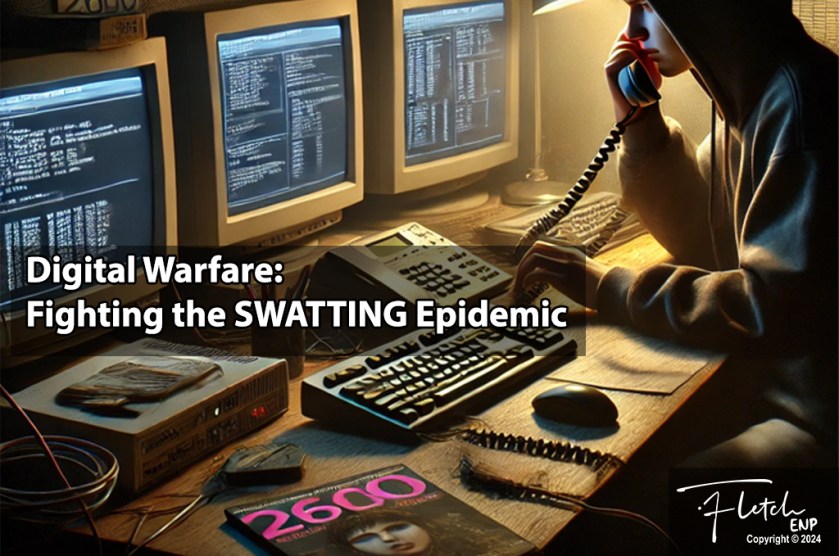
Swatting, the dangerous and disruptive act of making hoax emergency calls to provoke an armed police response, has recently become an alarming issue in schools, businesses, and public venues. This heinous prank is often carried out to invoke revenge, harassment, or, most recently, financial gain, endangering the public, wasting valuable emergency resources, and instilling fear in communities. However, as technology has enabled this problem, it can provide a solution.
Swatting: A Rising Social Threat
Swatting is no longer a harmless prank—
“Is your refrigerator running? You better catch it!”
It has grown into a calculated act of cyber harassment. Perpetrators use technology to manipulate emergency services to respond to fabricated threats, such as mass shootings or bombings, at targeted locations. Victims range from public figures and journalists to everyday citizens. In these highly escalated and realistic situations, the consequences can turn deadly, as seen in the tragic case of Andrew Finch, who lost his life when police acted on a false report of a man with a weapon.
The situation is exacerbated by the increasing ease with which swatters operate. In the past, the technology required to swat, was to be technically savvy – hacking into complex networks and manipulating technology to their benefit. Today, social media and the dark web have allowed malevolent individuals to publicize and even monetize their “services,” as demonstrated by the case of California teen Alan Filion, who was responsible for reportedly orchestrating over 375 swatting incidents. Filion’s actions, which included threats to schools, religious institutions, and private homes, underscore the severity of the problem and the urgency for innovative countermeasures to be deployed.
Innovative Technology to Combat Swatting
While the rise of swatting is concerning, technology exists, initially designed for other purposes, that can be easily employed to address this issue. By leveraging situational awareness tools for verification and control, internal security teams and emergency responders can develop new policies and a more robust framework allowing the mitigation of swatting incidents. These include:
1. Enhancing Overall Situational Awareness
When a 911 call is received, technology can be utilized to assess and establish the threat’s credibility. For example, the incident can be flagged as suspicious if a caller reports an active shooter but no corroborating evidence—such as gunshot detection alerts, security camera footage, or reports from multiple witnesses exists. While it cannot be dismissed outright, this additional context can guide law enforcement to approach the situation with heightened caution and adaptability.
2. Leveraging IoT and Smart Building Systems
The Internet of Things (IoT) has transformed buildings’ operations, offering real-time monitoring and control over access control and critical systems. By integrating these IoT devices into the public safety workflow, authorities can gain valuable insights into a facility’s environment during a potential swatting incident.
For example:
- Video Surveillance: Live feeds from security cameras can help validate reports by providing visual confirmation of activity—or the lack thereof—within a building delivered to any mobile device or vehicle MDT.
- Gunshot Detection Systems: New affordable acoustic and pressure wave sensors can immediately notify responders of gunfire; even identifying the weapon type and caliber can enable a quicker and more appropriate level of response.
- Environmental Sensors: These can provide data on temperature, motion, or occupancy to confirm or refute claims of unusual activity.
3. The Command and Control Dashboard
Modern Emergency Management Platforms now centralize data from IoT devices across disparate systems into a comprehensive command dashboard. The platforms can be accessed by on-site personnel or remotely by emergency responders, offering a unified view of the situation. For example, in the platform from 911inform, key functionalities include the ability to control and interact with the environment by:
- Unlocking or securing doors to control access to specific areas.
- Monitoring and managing building occupancy.
- Communicating directly with occupants via integrated public address systems.
This level of control enhances situational awareness and empowers responders to act decisively, minimizing risk to civilians and officers.
4. Collaboration Between Businesses and Public Safety
Businesses are in a perfect situation to play a critical role in combating swatting. They typically have the ability and budget to implement these technologies and proactively collaborate with public safety agencies. For instance:
- Schools and workplaces can share access to security camera feeds with law enforcement during emergencies.
- Facilities can provide detailed interactive floor plans and live environmental data to first responders, aiding in internal navigation and assessing any active threats.
- Organizations can establish new and enhanced protocols for validating emergency calls, using tools like voice analytics and cross-referencing reported incidents with known patterns of swatting behavior.
Case Studies: Technology in Action
Several real-world examples illustrate how technology can make a difference in responding to swatting incidents:
- Gunshot Detection in Schools: A school equipped with gunshot detection sensors successfully prevented a hoax from escalating. When a swatting call reported gunfire on campus, responders accessed the system and confirmed no shots were fired, allowing them to de-escalate the situation quickly.
- Smart Building Systems in Corporate Offices: A business with IoT-enabled locks and cameras faced a swatting attempt. By granting law enforcement temporary access to their control dashboard, they confirmed the absence of a threat before officers entered the premises, ensuring a safe and coordinated response.
- Public Safety Partnerships in Urban Areas: A citywide network of security cameras and environmental sensors has been implemented in several metropolitan areas. These systems allow dispatchers to verify reports of violence or bomb threats by cross-referencing multiple data points, significantly reducing false alarms.
The Future of Anti-Swatting Measures
As swatting evolves, so must the strategies to counteract it. Emerging technologies hold promise for enhancing public safety and preventing misuse of emergency services:
- AI and Machine Learning: Predictive analytics can identify patterns in swatting calls, helping dispatchers flag high-risk incidents for additional scrutiny.
- Blockchain for Caller Authentication: Decentralized identity verification could make it harder for swatters to spoof phone numbers or hide their identities.
- Advanced Communication Systems: Next-generation 911 (NG911) platforms can integrate multimedia data—such as videos, texts, and images—into emergency calls, providing responders with richer context for decision-making.
Striking a Balance Between Vigilance and Preparedness
While technology offers powerful tools to combat swatting, balancing vigilance and overreach is essential.
Every emergency call must be treated with the utmost seriousness to avoid endangering potential victims.
At the same time, responders must be equipped with the resources to effectively identify and mitigate false threats. This dual approach—prioritizing both preparedness and critical evaluation—ensures that public safety agencies can respond to genuine emergencies while minimizing the disruption caused by malicious actors.
Turning the Tables on Swatters
Swatting is a dangerous and disruptive practice, but is by no means an insurmountable problem. By harnessing existing public safety situational awareness technology, businesses and public safety agencies can gain the upper hand. Enhanced situational awareness, IoT integration, and collaborative solutions offer a pathway to safer, more efficient responses to swatting incidents.
At 911inform, we take our mission seriously and continue to innovate as technology unfolds. We do this because it’s crucial to remain one step ahead of those who misuse technology for harm. Our entire team believes that by turning the tools of the digital age into instruments of safety and accountability, we can protect our communities and ensure that emergency services are used for their true purpose: saving lives.
If you would like to speak with any of our experts to discuss what we can do to help you manage your facility and exposure – reach out to us on the web at http://www.911inform.com or you can call us at 833-333-1911 and speak to one of our dedicated sales engineers.
Our focus is on simplifying the delivery of safety information through innovative new data presentation to the ECC and managing that data by the Enterprise. We are setting a brand-new standard for emergency response data by leveraging advanced technologies and a user-centric approach. As the industry evolves, the importance of actionable, productive data will only grow, underscoring the need for continuous innovation and improvement in this critical field.
If you find my blogs informative, I invite you to follow me on X @Fletch911. You can also follow my profiles on LinkedIN and Facebook and catch up on all my blogs at https://Fletch.tv.
Thanks for spending time with me; I look forward to next time. Stay safe and take care.

Follow me on Twitter/X @Fletch911
See my profiles on LinkedIN and Facebook
Check out my Blogs on: Fletch.
© 2024, All Rights Reserved, Mark J. Fletcher, ENP
Reuse and quote permitted with attribution and URL
 The World According to Fletch . . .