
FOR AND AUDIO VERSION OF THIS BLOG: CLICK BELOW
Network reliability and up-time are paramount in emergency communications, where seconds can mean the difference between life and death. Next-generation 911 systems are poised to transform emergency response by supporting a wide array of multimedia inputs, including voice, text, video, and data from IoT sensors. However, the complexity of these new technologies and the scale at which they are being deployed present significant challenges.
One of the most effective ways to ensure that NG911 systems perform optimally and reliably is to conduct thorough testing — not just for functionality and compliance but also for failure points. This article will explore the importance of building and executing these test environments as we move toward the next evolution of Emergency Services.
Why Test Environments Matter for any Complex Network
In the case of NG911, it becomes even more critical. NG911 systems are no longer voice communication platforms; they are multimedia ecosystems that integrate disparate data streams — from voice calls to video footage from the public and emergency responders. The systems supporting NG911 must be resilient, scalable, and capable of functioning under high stress. This will ensure emergency communication services are always available, even during significant events. By building dedicated test environments, engineers can simulate real-world scenarios and identify issues before they affect live operations. These test environments serve as a controlled space where all aspects of the system can be rigorously examined, ensuring functionality, security, performance, and, most importantly, reliability.
Compliance and Functionality Testing
Compliance testing ensures the NG911 system meets all regulatory standards and industry specifications. These might include confirming the system adheres to standards like the National Emergency Number Association (NENA) i3 standards or other regional regulatory guidelines. Functionality testing, on the other hand, verifies that all network components—whether call-handling software, geographic information systems (GIS), or text-to-911 platforms—are working as expected. While these tests are critical for ensuring the system works according to the standards, they only assess whether it meets the minimum requirements. Compliance and functionality testing do not guarantee the system will continue functioning under stress or when a critical failure occurs.
The Importance of Stress Testing and Failure Scenarios
In the real world, failure scenarios are inevitable. Power outages, hardware malfunctions, cyber attacks, and unexpected traffic spikes can all cause failures that disrupt service. In complex NG911 networks, failure points can range from the failure of an entire data center to a flood or fire, or they can be isolated to key network component failures or the breakdown of critical communication links.
Testing failure points —stress testing — is essential to understanding where these failures might occur, how they affect the overall system, and how quickly responders can recover. When testing for failure points, engineers intentionally push the system beyond its normal operational limits to discover the weak spots. This enables them to:
- Identify Breaking Points: By simulating failure conditions, engineers can determine where the system breaks down. Is it a specific piece of hardware, an application, or a network segment? What causes it to fail, and how does it impact the system?
- Understand Recovery Time: It is crucial to know how long it takes to recover from failures in different parts of the system. This information helps engineers establish acceptable recovery times and improve procedures for swift and efficient repairs.
- Develop Failure Procedures: Engineers can develop clear failure protocols when the network is tested to its breaking point. These protocols will streamline troubleshooting and repair procedures during a real emergency.
- Mitigate Common Failures: Failure analysis helps identify common failure points and patterns, enabling organizations to take proactive measures, like redundancy and monitoring systems, to mitigate those issues in the real world.
These are typical best practices in other critical industries, such as finance, healthcare, and airlines, which have been upgrading complex networks for decades.
Testing to Failure in NG911
In an NG911 environment, failures could range from simple, localized outages to large-scale service disruptions. Proper test scenarios should cover the following:
- Hardware Failures: Simulating a hardware failure (e.g., a server crash) is critical to observe how the system responds and whether data loss occurs. The key is testing whether backup systems automatically take over and maintain service.
- Network Failures: Simulating network congestion or a communication link failure to test whether NG911 systems can reroute traffic, dynamically reassign resources, and maintain communication.
- Software Failures: Investigating how the software behaves when it crashes or faces bugs that cause it to malfunction. Do emergency responders receive accurate data even if part of the system fails?
- Power Failures: Understanding the role of power backup systems in ensuring uninterrupted service during power outages. Testing the failover mechanisms for these systems should include automatically switching to backup power without dropping calls. Additionally, highlighting additional requirements, such as fuel delivery for the generator, must be considered.
- Scalability Issues: The system should be tested under conditions of high demand, such as natural disasters or significant events, to ensure that it can handle the increased load without crashing.
Building Test Environments for NG911
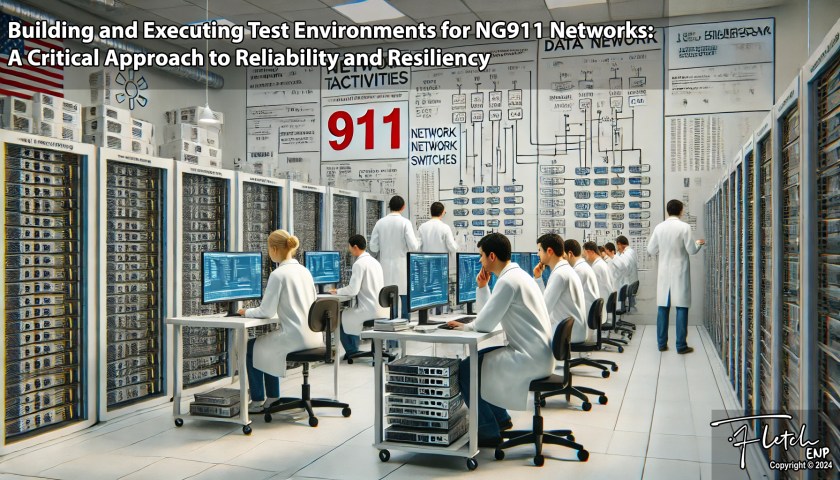
Creating an adequate test environment for NG911 involves replicating all components of the network and its communications ecosystem in a controlled, isolated lab environment. This lab should simulate real-world conditions, allowing engineers to experiment with different configurations and what-if scenarios without jeopardizing the live system. Key steps in building such a lab should include:
1. Simulating Network Infrastructure
A comprehensive NG911 test environment should include all significant network components that will be involved in production, such as:
- Core network elements (servers, routers, switches)
- Communication components (PSAP workstations, call routing software)
- Security protocols and firewalls
- Data storage and backup solutions
The test environment should be built to simulate the redundancy and failover mechanisms in the production environment, such as geographically diverse data centers or cloud-based infrastructure.
2. Including Realistic Traffic
The system should be stress-tested with realistic data and voice traffic patterns. This includes simulated 911 calls, text messages, video feeds, and other data sources the system will handle in real-life emergencies. Testing should simulate peak usage times, such as during major events or disasters.
3. Creating a Failover Mechanism
A critical aspect of the test environment is simulating failures and ensuring that the NG911 system can fail to back up systems, maintain service, and trigger alarms when problems arise. Engineers should test the system’s ability to automatically reroute calls, maintain communication channels, and restore service promptly.
4. Monitoring and Logging
Using monitoring tools to log performance, uptime, and failures during test exercises is crucial. These logs will be invaluable in analyzing the system’s behavior during stress tests and failures. Logs help trace the causes of problems and identify trends or recurring issues.
Methodologies for Documenting Test Results
Proper documentation is essential for evaluating the results of NG911 testing. This documentation should clearly outline the following:
- Test Scenarios: What was tested? (e.g., hardware failure, software crash, high network traffic)
- Performance Metrics: What metrics were tracked? (e.g., uptime, recovery time, call completion rate)
- Failure Points: What were the specific failure points observed during testing?
- Recovery Procedures: What was the recovery time for each failure scenario?
- Lessons Learned: What improvements can be made based on the test outcomes?
These documents will provide insights that allow engineers to tweak the system for better performance and prepare detailed failure recovery procedures.
Wrapping it up
The deployment of NG911 systems presents tremendous opportunities and significant risks to Public Safety. Due to the hardware age and the potential for failures and spare parts, continuing to operate on analog-based legacy systems is no longer functional, practical, or realistic. However, as these new complex NG911 networks continue to roll out, ensuring their reliability and resiliency through rigorous testing is essential. Engineers can proactively identify weaknesses, improve recovery protocols, and refine systems to handle even the most challenging emergencies by building dedicated test environments that simulate real-world stress and failure scenarios.
Through these testing efforts, public safety agencies, network engineers, and system integrators will be able to create more reliable, robust NG911 networks capable of withstanding failures – and deliver emergency services quickly and efficiently, saving lives when it matters most.
It all starts with a Plan.
A customized test plan is any environment’s first and most critical step. You’re likely to fail overall without knowing what you’re testing and what failures you’re looking for. Here are some critical points that every plan should include:
- Define Testing Objectives:
- Determine the specific functionality to test (e.g., scalability, failover, security).
- Establish performance benchmarks (e.g., uptime, response time).
- Develop Test Scenarios:
- Identify common failure points to test (e.g., power failure, server crash).
- Simulate various traffic patterns and emergency scenarios.
- Execute Testing:
- Test under normal and stressed conditions.
- Record data on performance, failures, and recovery times.
- Analyze Results:
- Identify weaknesses and common failure points.
- Document recovery procedures and improve system design.
- Iterate and Improve:
- Revise the system based on test results and retest until performance meets or exceeds benchmarks.
By following these steps, engineers can ensure that NG911 systems are fully prepared for real-world emergencies, allowing public safety professionals to serve their communities without interruption.
At 911inform, the focus is on simplifying the delivery of safety information through innovative new data presentation to the ECC and managing that data by the Enterprise. We are setting a brand-new standard for emergency response data by leveraging advanced technologies and a user-centric approach. As the industry evolves, the importance of actionable, productive data will only grow, underscoring the need for continuous innovation and improvement in this critical field.
If you find my blogs informative, I invite you to follow me on X @Fletch911. You can also follow my profiles on LinkedIN and Facebook and catch up on all my blogs at https://Fletch.tv.
Thanks for spending time with me; I look forward to next time. Stay safe and take care.

Follow me on Twitter/X @Fletch911
See my profiles on LinkedIN and Facebook
Check out my Blogs on: Fletch.
© 2024, All Rights Reserved, Mark J. Fletcher, ENP
Reuse and quote permitted with attribution and URL
 The World According to Fletch . . .