

CLICK BELOW For an audio version of this Blog
This coming February 16, it will be 20,820 days since the very first call to 9-1-1 debuted in the sleepy little town of Haleyville, AL, at 2:00 PM on an otherwise quiet Friday afternoon.
I have to stop and wonder if the mayor and police chief realized the monumental evolution in Public Safety they were about to kick off. Their citizens could now reach emergency services for the first time in the country without knowing anything except a single 3-digit number, 9-1-1.
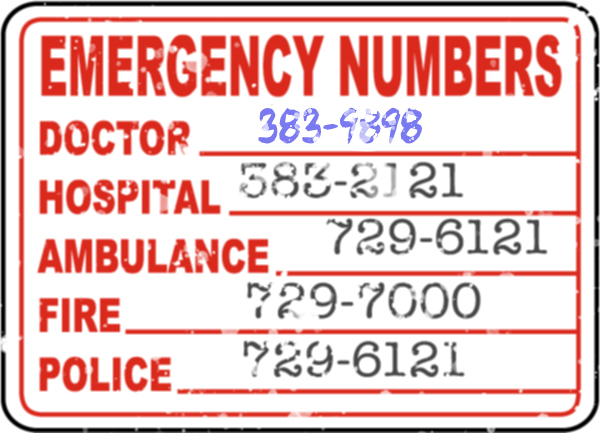
Initially, the sole function was to eliminate citizens having to memorize a list of local 7-digit telephone numbers required, or placing stickers on their phones helping them reach Police, Fire, or an Ambulance for the jurisdiction where they were located.
Although, some larger 911 jurisdictions had a special Automatic Number Identification Display installed by the phone company. This basic numeric display provided the 911 call-taker with the calling number, which could then be used to call back the caller or identify them by manually searching a ‘reverse phone book.’ (Often out of date the moment it was printed)
‘Enhanced 9-1-1 (or E9-1-1)’ technology was new technology that automatically referenced the callers number, and pinpointed the caller’s location. This was then provided to the 911 dispatchers for assignment. This technology finally started to appear in centers around the mid-80s. Finally, public safety now had the critical location information they needed, and help became available faster than ever before, saving countless lives. Once again, public safety technology was redefined for a new generation of professional call takers.
Sadly, however, four decades have slipped by, yet this same communications technology remains, while user device mobility and VoIP technology has changed the very face of our core communications. Yet again, our once-innovative emergency communications infrastructure has become a boat anchor and roadblock to progress.
The Legacy of E9-1-1
Simply put, E9-1-1 was designed in an era when landlines dominated our communications infrastructure. The system addressed the challenges of the time, providing location-based routing that transformed emergency response. For decades, it remained the gold standard. But today, the technology that once set the bar now struggles to keep pace with the demands of the digital age.
Why E9-1-1 Is No Longer Enough
What happened? As the Internet and IP communications evolved, modern emergencies don’t just involve voice calls. Today’s crises now include text messages, live video streams, IoT sensor data, and more. E9-1-1, built on outdated voice-only technology, can’t handle this modern influx of multi-media data; unfortunately, the results can be deadly.
Slower response times, missing or incorrect location information, a complete lack of situational awareness, and (in the business environment) significant risks to employee safety. The issue has caused the creation of multiple federal requirements, such as Kari’s Law, Alyssa’s Law, and the RAY BAUM’S Act, in an attempt to increase compliance and safety.
For businesses, it can impact the bottom line. Maintaining legacy communications systems and legacy E9-1-1 services, also comes at a higher cost. As technology continues to evolve, supporting outdated infrastructure becomes more costly, and diverts resources from innovation and modernization efforts. But this inefficiency is more than just a budgetary concern—it is an employee safety issue that results in a significant financial liability, not to mention the negative impact on the reputation and brand of a company.
The Benefits of NG911
Enter Next Generation 911 (NG911). For the past 2 ½ decades, this modern architecture has been built from the ground up. Built using today’s modern technology and architecture, it can address tomorrow’s needs and evolution in emergency communications. NG911 can process multimedia data, giving emergency responders a clearer picture of incidents as they unfold. It integrates seamlessly with geolocation services, environmental sensors, and new enterprise emergency safety platforms, streamlining operations and reducing response times.
Another attractive fact to any budget-conscious administrator is that NG911 is more cost-efficient. While the transition does require an investment, it does eliminate the escalating expenses of maintaining outdated IT systems and opens the door to implementing a future-proof solution. Overall, this delivers an acceptable operational ROI while providing a safer working environment.
The Real Cost of Lagging Behind
Businesses that cling to their E9-1-1 solutions don’t just incur technological limitations—it can also be a significant liability.
The Hidden Costs of Inaction
While enterprises may feel “safe” sticking with familiar E9-1-1 systems, the financial and operational risks are significant. Organizations that ignore moving to NG911 risk further exposure to corporate emergencies’ legal and financial risks. Moreover, they miss out on potential opportunities to utilize innovative and new technologies that can allow the business to grow and expand with the demands of the modern digital workplace. Imagine a new communications technology that cannot be deployed without weighing the risk against the cost of employee safety.
Some common areas that are often not considered when making a communications infrastructure decision are:
- Legal and Compliance Penalties: Failing to comply with Kari’s Law and RAY BAUM’S Act can result in substantial fines and legal liabilities.
- Inefficient Emergency Response: Delayed or inaccurate location data puts employees and visitors at risk and increases the likelihood of tragic outcomes.
- Reputation Damage: In a world where public safety failures make headlines, enterprises risk eroding trust with employees, customers, and partners.
- Operational Costs: Maintaining legacy systems is expensive, with recurring costs for hardware maintenance, retrofits, and manual processes to ensure compliance.
The reality is this: Staying with basic E9-1-1 is no longer cost-effective, safe, or sustainable.
The Future Starts Now
E9-1-1 had its time, and it served us well over many years. However, current communications modalities and the future of employee safety demand a more robust and flexible communications solution for emergency services. NG911 isn’t just an upgrade; it’s a transformation that ensures organizations are ready for whatever challenges lie ahead. Despite what some emergency response providers without NG911 say, the new technology is ‘not just a concept’ or a ‘pilot program.’ It lives in many areas, is defined and operational, and is being deployed across the US and Canada, as well as fully interoperable NG112 systems in the European Union. The new networks and infrastructure exist, and the solutions are developed and ratified at a global level and ready to be deployed. The only thing holding businesses back is awareness and education.
A Call to Action in Orlando, Florida

We can no longer wait for technology to evolve. Several clear leaders in the industry have emerged at all levels. Once again, I am proud to join my industry colleagues in one spot at the 2025 Enterprise Connect event on March 19TH @ 9AM. Once again, my colleagues, 911 Attorney Martha Buyer, Bandwidth’s NG911 Solutions Engineer Robin Ekila, and new this year, Osceola County Sheriff’s Department Support Systems Specialist, and Certified ENP, Erika Lakey, will be joining me on a terrific panel session, once again hosted by Metrigy President and Principal Analyst, Irwin Lazar.
This year we promise to dig in deep for a very frank and relevant discussion on moving the needle forward NOW to save lives with NG911 solutions and capabilities.
Please join us for some morning coffee and an eye-opening early session on Wednesday morning at 9AM. I promise! You won’t be sorry. Plus, your employees—and your bottom line—deserve nothing less.
At 911inform, our focus is on simplifying the delivery of safety information through innovative new data presentation to the ECC and managing that data by the Enterprise. We are setting a brand-new standard for emergency response data by leveraging advanced technologies and a user-centric approach. As the industry evolves, the importance of actionable, productive data will only grow, underscoring the need for continuous innovation and improvement in this critical field.
If you find my blogs informative, I invite you to follow me on X @Fletch911. You can also follow my profiles on LinkedIN and Facebook and catch up on all my blogs at https://Fletch.tv.
Thanks for spending time with me; I look forward to next time. Stay safe and take care.

Follow me on Twitter/X @Fletch911
See my profiles on LinkedIN and Facebook
Check out my Blogs on: Fletch.
© 2025, All Rights Reserved, Mark J. Fletcher, ENP
Reuse and quote permitted with attribution and
 The World According to Fletch . . .