
For an AUDIO version of this Blog: See the Player below:
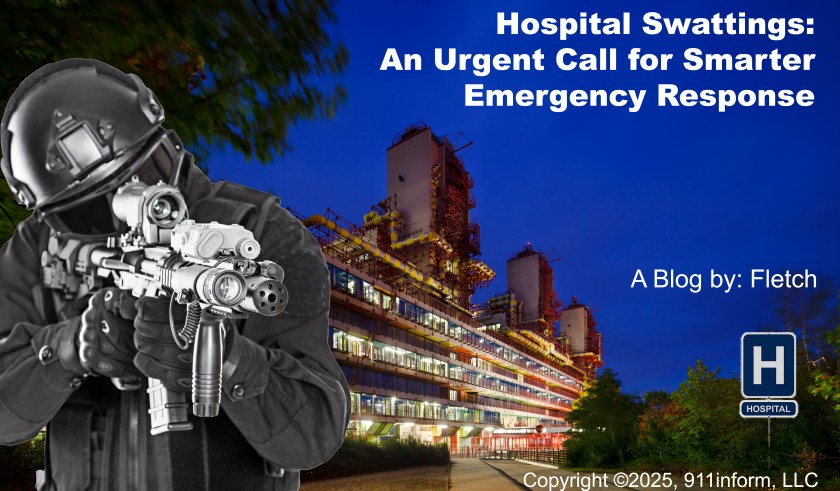
On March 12, 2025, the Loma Linda University Children’s Hospital in California became the target of a swatting incident—a malicious false report designed to trigger a massive police response. At approximately 6:00 PM, the San Bernardino County Sheriff’s Department received a call from an individual claiming to be armed and intending to harm people inside the hospital.
This hoax immediately escalated into a full-scale emergency. Law enforcement from multiple agencies, including municipal police, county sheriff’s deputies, and the California Highway Patrol (CHP), responded swiftly, initiating a facility-wide search.
After a comprehensive sweep of the hospital, authorities confirmed that there was no active threat, no gunshots had been fired, and no injuries were reported. However, the psychological and operational impact on patients, staff, and first responders was profound.
In the aftermath, hospital staff and patients have voiced concerns about the trauma they endured and the inherent dangers of such false alarms. Law enforcement has since launched an investigation to identify the perpetrator of this dangerous and reckless act.
This incident underscores a growing need for next-generation emergency management solutions, such as 911inform, that can dramatically improve coordination and situational awareness during high-stress events.
The Reality of Swatting in Public Safety
Swatting incidents are more than just disruptive pranks—they’re a serious public safety concern. These hoaxes divert law enforcement resources away from genuine emergencies, place lives at risk, and cause unnecessary panic among civilians.
In critical environments like hospitals, the impact is even more severe. Patients—many of whom may be in fragile health conditions—are forced into lockdown procedures, caregivers are distracted from urgent medical tasks, and first responders must sift through uncertainty to determine whether a real threat exists.
While law enforcement agencies are well-trained to handle active shooter scenarios, swatting incidents create chaotic conditions that complicate response efforts. Better coordination, real-time information sharing, and digital situational awareness are essential to managing these crises effectively.
This is where 911inform can make a game-changing difference.
How 911inform Could Have Improved the Response
The 911inform platform is built to bridge the gap between first responders, emergency personnel, and facility management. In an incident like the Loma Linda Hospital swatting hoax, several key features of the platform could have significantly enhanced the response and mitigated the impact.
1. Real-Time Command and Control for Multi-Agency Response
More than 200 public safety personnel from multiple agencies responded to the swatting call. The 911inform dashboard could have provided a unified command interface, allowing real-time coordination between responding agencies.
- Live facility maps could have been instantly shared with law enforcement, showing entry points, evacuation routes, and areas of concern.
- A centralized communication hub would have enabled instant information exchange between municipal police, county sheriffs, and CHP, eliminating confusion and reducing response times.
Instead of manual coordination through radio communications alone, 911inform would have allowed on-scene responders and command centers to share real-time updates via a secure digital interface.
2. Instant Alerts to Staff, Patients, and Visitors
During the incident, the entire hospital was placed on lockdown. Patients and visitors were secured in their rooms, some hiding in closets, while others were evacuated where feasible.
With 911inform, emergency alerts could have been delivered via multiple channels to ensure everyone in the hospital was informed with clear, real-time instructions:
- Paging systems
- Text message alerts
- Push notifications
- Digital signage integration
Instead of relying solely on overhead announcements or staff physically delivering instructions, 911inform could have instantly provided detailed, text-based notifications to everyone on-site.
This would have minimized confusion, ensured everyone received clear instructions, and prevented unnecessary panic or unsafe movements during the response.
3. Enhanced Building Clearing with Digital Floor Plans
One of the most tedious and time-consuming tasks in a large-scale response like this is conducting room-by-room searches. Officers must clear each space methodically, ensuring no threats are present before moving on.
911inform Building Clearing Mode could have streamlined this process:
- Digital floor plans could have been updated as each room was cleared in real time.
- Rooms change color from red to green once verified as safe.
- Multiple clearances could be tracked with different shades for rooms that were searched more than once.
- Any suspicious items (such as an unknown backpack) could be marked digitally for further investigation.
- Evacuation routes could have been dynamically updated to reroute people around unsafe areas.
Instead of using paper-based maps or verbal confirmation, first responders could have relied on live digital tracking, accelerating the search process while eliminating redundancy.
4. Patient Reunification and Tracking
Evacuating a hospital means accounting for thousands of patients and visitors, many of whom require special medical attention.
The 911inform Reunification Module could have simplified this complex process:
- By integrating with patient records, responders could instantly identify critical-care patients needing priority assistance.
- Staff could have been assigned to specific tasks, ensuring efficient patient care and minimized disruptions.
- Search teams could target specific rooms for high-risk evacuations, avoiding unnecessary relocation of fragile patients.
Instead of manually tracking patients, the hospital could have used a digital system to streamline accountability and prevent delays in medical care.
The Bigger Picture: Smarter Emergency Management for Public Spaces
Large-scale emergencies require more than just training and manpower—they demand intelligent technology that enhances situational awareness, facilitates communication, and improves operational efficiency.
The 911inform platform was designed specifically to address real-world public safety challenges, incorporating lessons learned from past incidents to create a smarter, more effective emergency response system.
For hospitals, schools, corporate campuses, and other large facilities, 911inform is the clear choice for:
✅ Enhanced communication and coordination
✅ Instant situational awareness for law enforcement
✅ Faster, more efficient building clearing
✅ Seamless patient and visitor tracking
✅ Compliance with Kari’s Law, RAY BAUM’S Act, and Alyssa’s Law
Final Thoughts: A Wake-Up Call for Smarter Safety Solutions
The Loma Linda University Children’s Hospital swatting incident was yet another reminder of how vulnerable public spaces are to false threats.
While law enforcement responded swiftly and effectively, the entire experience could have been far more efficient and less traumatic with the right technology in place.
It’s time for hospitals, schools, and other public institutions to move beyond reactive emergency management and adopt proactive solutions that empower first responders and protect lives.
We cannot prevent bad actors from making hoax emergency calls, but we can equip public safety professionals with the tools they need to respond smarter, faster, and with greater precision.
This is not the first swatting event—and it certainly won’t be the last. So, the real question becomes: “Will we be ready NEXT time?” With 911inform implemented, the answer is YES.
At 911inform, the focus is on simplifying the delivery of safety information through innovative new data presentation to the ECC and managing that data by the Enterprise. We are setting a brand-new standard for emergency response data by leveraging advanced technologies and a user-centric approach. As the industry evolves, the importance of actionable, productive data will only grow, underscoring the need for continuous innovation and improvement in this critical field.
If you find my blogs informative, I invite you to follow me on X @Fletch911. You can also follow my profiles on LinkedIN and Facebook and catch up on all my blogs at https://Fletch.tv.
Thanks for spending time with me; I look forward to next time. Stay safe and take care.

Follow me on Twitter/X @Fletch911
See my profiles on LinkedIN and Facebook
Check out my Blogs on: Fletch.
© 2025, All Rights Reserved, Mark J. Fletcher, ENP
Reuse and quote permitted with attribution and URL
 The World According to Fletch . . .