
For an AUDIO version, use the audio player below
Over the past several months, some Next Generation 911 (NG911) implementations have faced scrutiny due to various challenges. However, it’s essential to shift our focus toward the positive outcomes and successful deployments that have significantly enhanced public safety communications. These successes underscore the resilience and reliability of NG911 networks, fulfilling the vision of the National Emergency Number Association’s (NENA) i3 architecture in advancing emergency communication services.
Understanding the Three Pillars of Emergency Services
To appreciate the transformative impact of NG911, it’s helpful to conceptualize emergency services as comprising three interconnected pillars:
1. Originating Networks
Originating networks encompass not only traditional cellular carriers but also the extensive communication infrastructures within businesses, schools, colleges, and hospitals. These entities manage large internal communication networks, serving numerous employees and guests daily. While the proliferation of individual cellular devices has shifted focus away from these systems, they remain crucial. These networks often serve as origination points for Internet of Things (IoT) data, providing situational awareness that enriches the overall emergency response ecosystem.
2. Carrier Networks
Carrier networks are responsible for ingesting service requests from both citizens and commercial environments, routing and connecting communications to appropriate endpoints on the national network. These connections facilitate various interactions, from customer service inquiries to emergency calls. As communication methods diversify, carrier networks play a pivotal role in accurately detecting the location of individuals requesting service and directing them to the most suitable emergency response agencies.
3. Emergency Services Networks
The emergency services network is the backbone of the 911 system, housing the ingress points for emergency call takers and dispatchers. Historically, the U.S. developed over 6,000 individual and unique 911 service silos with minimal interoperability. These networks were often grouped based on telephone company service areas rather than jurisdictional or operational needs, leading to fragmented systems. This lack of standardization posed significant challenges in creating a cohesive and interoperable emergency response infrastructure.
The Challenge of Transitioning to NG911
Transitioning from legacy 911 systems to NG911 is akin to upgrading from a black-and-white television to a high-definition color TV. While the technology exists, the process involves complex interoperability issues, especially when neighboring agencies operate on different systems. The coexistence of legacy and next-generation networks during the transition period creates a technological void that requires careful navigation.
States that proactively built the infrastructure for statewide NG911 deployment alongside existing Enhanced 911 (E911) networks have found the transition more efficient. Although the new networks initially remained inactive, they provided a backbone architecture for public service agencies to connect and achieve a level of interoperability. However, the public often saw no immediate benefit, as legacy calls continued over the new protocols without noticeable improvements.
Success Stories: NG911 Deployments Making a Difference
Despite the challenges, several regions have successfully implemented NG911, demonstrating its potential to revolutionize emergency communications.
Logan County, West Virginia
Logan County, with a population of approximately 32,000, became a pioneer in NG911 deploying a cloud-based end-to-end NG911 solution adhering to the NENA i3 standard, doing much of the work themselves, slashing their projected implementation costs by coming in $100,000 UNDER BUDGET. This implementation introduced a hosted active-active Emergency Services IP Network (ESInet), eliminating single points of failure and connectivity that is both terrestrial and via Starlink Satellite, ensuring continuous operation even during network disruptions. Dispatchers reported significant improvements in audio clarity and precise caller location information, facilitating quicker and more effective emergency responses.
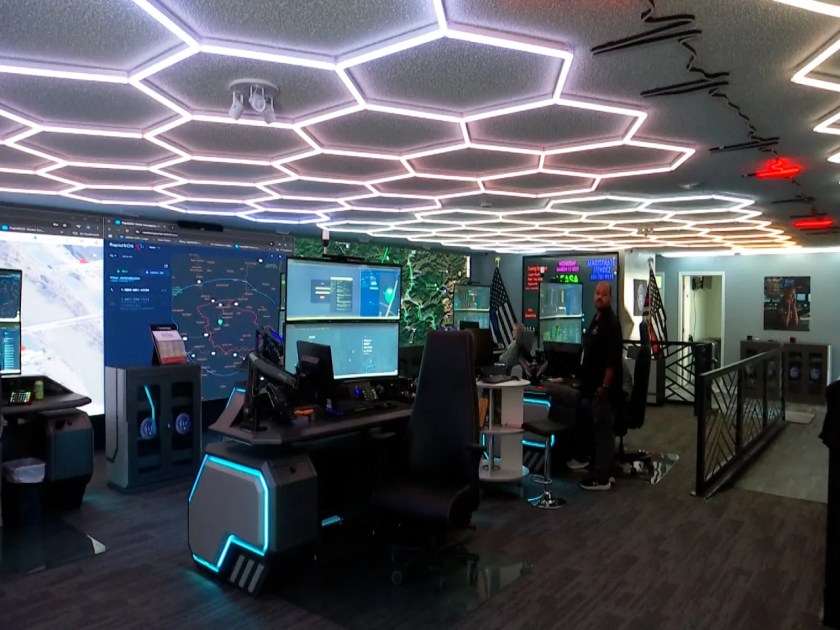
The center features four fully operational positions and a supervisor’s position with room to expand in the existing space. The entire wall of the center consists of floor-to-ceiling video panels, displaying maps, local video feeds, escalation numbers, and even the on duty tow truck list. Another amazing feature is that the room is all run, not from a large environmentally controlled data center, but from a single rack of servers in a small storage room, off to the side.
This center is a shining example of Cloud-based Next Generation 911, put together by Ted Sparks, a NENA-certified ENP, and the Director of Logan County Emergency Operations 911.
Arizona and Tennessee
Additionally, both Arizona and Tennessee have made remarkable strides in NG911 implementation. Arizona’s 911 Program (AZ911) and the Tennessee Emergency Communications Board (TECB) centralized coordination efforts, established strong vendor partnerships, and enforced strict service-level agreements. These strategies led to the successful deployment of NG911 systems across their respective states, enhancing emergency response capabilities and setting examples for other regions to follow.
The Role of NENA’s i3 Architecture
The NENA i3 architecture provides a standardized framework for NG911 systems, ensuring interoperability and guiding the transition from legacy systems. By defining functional elements and interfaces, the i3 standard facilitates the integration of various components within the NG911 ecosystem. This architecture supports end-to-end IP connectivity, allowing for the seamless transmission of voice, text, images, and video, thereby enriching the information available to emergency responders.
The Path Forward: Embracing NG911 Nationwide
The successful deployments in Logan County, Arizona, and Tennessee and dozens of other sttes with successful ESINet deployments, illustrate the transformative potential of NG911. As more regions adopt the technology, benefits will become increasingly evident to citizens. New services will include things like:
- Enhanced Data Sharing: NG911 enables the transmission of multimedia data, providing first responders with comprehensive information to assess and respond to emergencies effectively.
- Improved Location Accuracy: Utilizing geospatial data, NG911 systems can pinpoint caller locations more accurately than traditional methods, reducing response times and saving lives.
- Increased System Resilience: The IP-based infrastructure of NG911 offers greater reliability and redundancy, ensuring continuous operation during disasters or network failures.
- Interoperability Across Jurisdictions: Standardized protocols facilitate seamless communication between agencies, enhancing coordination during multi-jurisdictional incidents.
While the transition to NG911 presents challenges, the successes achieved in various regions underscore its value in modernizing emergency communications. At 911inform, we’re already doing our part to contribute compliant interactive information from schools, businesses, hospitals, or any other environment containing IoT devices that provide valuable additional data to the overall common operating picture. This allows Public Safety to obtain desperately needed information to provide their constituents the best level of service.
By focusing on the positive outcomes and learning from success and failures, future implementations and stakeholders will be able to navigate the complexities of NG911 deployment better. By embracing this technology is a critical step toward building a resilient, reliable, and responsive emergency communication system that meets the evolving needs of the public.
At 911inform, the focus is on simplifying the delivery of safety information through innovative new data presentation to the ECC and managing that data by the Enterprise. We are setting a brand-new standard for emergency response data by leveraging advanced technologies and a user-centric approach. As the industry evolves, the importance of actionable, productive data will only grow, underscoring the need for continuous innovation and improvement in this critical field.
If you find my blogs informative, I invite you to follow me on X @Fletch911. You can also follow my profiles on LinkedIN and Facebook and catch up on all my blogs at https://Fletch.tv.
Thanks for spending time with me; I look forward to next time. Stay safe and take care.

Follow me on Twitter/X @Fletch911
See my profiles on LinkedIN and Facebook
Check out my Blogs on: Fletch.
© 2025, All Rights Reserved, Mark J. Fletcher, ENP
Reuse and quote permitted with attribution and URL
 The World According to Fletch . . .