
An AUDIO version of this Blog will be available HERE short;y
The City of Westfield, Indiana, recently passed what is described as the first ordinance of its kind in the state: residential care facilities will face tiered fees for non‑emergency 911 calls—lift assists, routine transports, and other cases deemed non‑urgent.
As Westfield Fire Chief Rob Gaylor told reporters, “non‑emergency calls can strain our resources, potentially delaying responses to life‑threatening incidents,” noting that “nearly one out of every three EMS calls originated from residential care facilities, and of those, roughly a third were considered non‑emergent.”
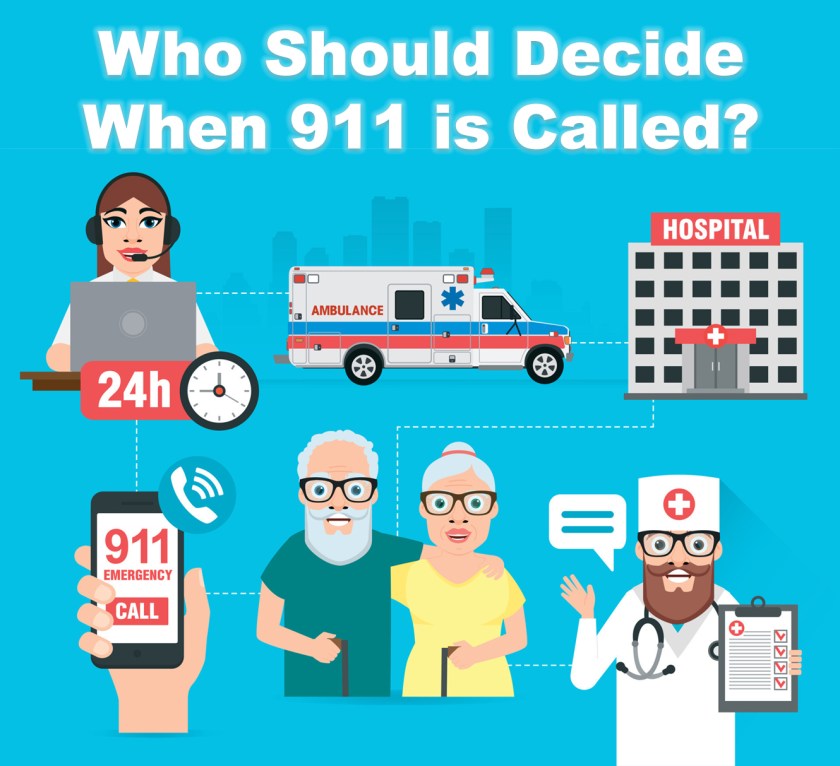
The intent is clear: reduce pressure on the 911 system so life‑or‑death calls aren’t delayed. But this approach raises a critical question: Who should decide when 911 is called? Should it be front‑line caregivers with incomplete medical training, or the public safety professionals at the receiving end?
1. The Fear: Interception and Delay
My concern is that institutions, under pressure to avoid fees, may configure their communications systems to block or intercept 911 calls, routing them through internal staff trained to identify “authenticity.” This introduces delay, exactly when seconds count in emergencies.
Why is that a problem? Because 911 dispatchers aren’t just routing services—they provide Emergency Medical Dispatch (EMD) assistance: guiding callers through CPR, choking protocols, and other life‑saving interventions while first responders are en route. If an incoming call is diverted or delayed, that crucial EMD lifeline disappears.
2. Critical Seconds and the Value of EMD
In any emergent medical scene—stroke, cardiac arrest, choking—every second saved improves outcomes. Dispatchers trained in EMD steps can be the difference between survival and tragedy. Westfield’s ordinance risks removing callers from that safety net, under the guise of reducing strain. That’s a dangerous trade‑off.
3. Federal Requirements and the Real Solution
It’s essential to note that multi-line telephone systems (MLTS) are already federally mandated to enable direct 911 dialing from any handset. Additionally, MLTS systems must trigger on-site notifications to internal responders when a 911 call is initiated.
With these protections, the system works like this: Person at risk calls 911 → call is routed instantly to public safety → internal staff are concurrently alerted and may meet responders or help manage the scene firsthand. This meets both public safety and institutional needs, without delaying care.
By implementing existing law as intended, we preserve the chain of immediate communication while enabling internal confirmation and coordination. If staff see there’s no real injury, they can communicate with dispatchers or responders in real-time and “pull back” resources before arrival. Critically, this occurs after the call is made, so no delay is introduced when seconds matter.
4. Beyond Penalties: Where Real Tech Can Help
Will this ordinance reduce 911 volumes? Possibly—but at what cost? Instead of defaulting to financial penalties that might drive risky behavior, we should explore technology-enhanced validation:
- Next-Gen 911 can tie a call’s origination to data sources—such as building sensors, smart devices, and wearable health monitors—allowing for contextual filtering without human delay.
- Telematics in vehicles already use threshold-based logic: only if crash sensors detect high G-forces does the call initiate. Similarly, senior-care facilities already have devices for fall detection, vital signs, oxygen saturation, etc.
- By building simple intelligent algorithms—”if two devices trigger simultaneously, auto‑dial 911; otherwise, escalate to internal responder”—interruptive and validating measures can reduce false positives and non‑urgent calls before they reach dispatch, all while preserving true emergency alerting.
This is not science fiction—it’s today’s IoT reality, leveraged responsibly.
5. Weighing the Ordinance vs. Safer Alternatives
- 👎 Ordinance + fine: May reduce non‑emergency 911 traffic—but risks undermining lifesaving dispatch practices, especially if institutions begin intercepting or rerouting calls internally.
- 👍 Enforce MLTS & on-site alerts: Provides instant public safety contact, internal awareness, and the option to cancel or downgrade EMS after call initiation—not before.
- 👍 Adopt smart tech & Next‑Gen 911: Uses data, sensors, and intelligent filtering to minimize non‑emergent 911 traffic without human delay.
6. A Path for Policy to Align with Mission
Westfield’s mission is noble: reduce strain and prioritize true emergencies. But legislation that requires a penalty-first approach without enabling guardrail technologies risks:
- Institutions cutting corners on 911 access.
- Delay or elimination of dispatcher EMD guidance.
- A slippery slope to increased liability and loss of public trust.
Instead, policy should:
- Ensure MLTS systems are adequately configured—every phone can dial 911 directly, and adjacent staff are notified.
- Encourage implementation of smart hardware & analytics validated by Next‑Gen 911 frameworks—not human gatekeeping.
- Provide grants or incentives for residential care facilities to deploy monitoring tech and integrate with dispatch.
- Use data to monitor the impact of ordinances and refine them—are true emergencies being delayed? Are lives adversely affected?
7. Final Thoughts: Who Really Should Decide?
At the end of the day, should the decision to call 911 come from a human, institution, or technology?
As we stand:
- If the decision is on institutional caregivers, costs and fear may override care.
- If it is left to dispatch-trained systems, the public safety lens dominates—which is appropriate.
- If we empower smart systems, then decisions are based on data and thresholds, and validated by emergency dispatch protocols.
Until that future arrives, we’re best to honor the chain of direct communication:
- ✅ 911 is dialed immediately.
- ✅ Dispatch provides life-saving EMD until responders arrive.
- ✅ MLTS notifies on-site staff to intervene or coordinate.
Beyond that, we can—and should—innovate responsibly. Fines alone may temporarily address volume, but deploying guard-rail technologies ensures we’re not sacrificing care for cost.
In Summary
When the question is “who decides when 911 is called,” our answer should be: the public safety system, guided by protocols, not penalty‑powered gatekeepers. Until data-driven tech steps in, intercepting calls risks lives. Let’s preserve direct access, empower care, invest in smart systems—and ensure that cost-saving policies never overshadow our mission to save lives.
As the industry evolves, the importance of actionable, productive data will only grow, underscoring the need for continuous innovation and improvement in this critical field.
If you find my blogs informative, I invite you to follow me on X @Fletch911. You can also follow my profiles on LinkedIN and Facebook and catch up on all my blogs at https://Fletch.tv. AND BE SURE TO CHECK OUT MY LATEST PROJECT TiPS: Today on Public Safety @ http://911TiPS.com
Thanks for spending time with me; I look forward to next time. Stay safe and take care.

Follow me on Twitter/X @Fletch911
See my profiles on LinkedIN and Facebook
Check out my Blogs on: Fletch and http://911TiPS.com
© 2025, All Rights Reserved, FLETCH 911, LLC
Reuse and quote permitted with attribution and URL
 The World According to Fletch . . .
I’m curious whether this agency has implemented EMD or EFD protocols that could help triage these non-emergency calls more effectively. Utilizing structured dispatch protocols could allow for appropriate alternative responses—like non-emergency transport—based on available city resources. This approach wouldn’t just ease the strain on emergency services; it could also significantly reduce liability for both the agency and the 911 dispatchers, who are ultimately placed in the difficult position of being gatekeepers and risk being named in litigation when outcomes go wrong.
LikeLike